Sunday, September 9, 2012

Getting Ready: Professional Contacts and Resources


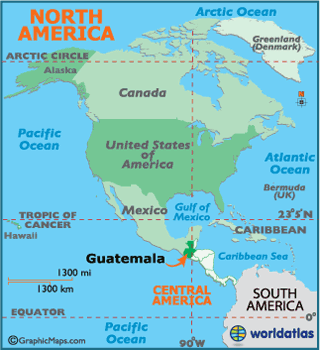
To begin my search for professional contacts out of country I turned to the first generation immigrants with whom I work.  I felt getting to know their educational experiences will help me better understand the strategies and priorities they implement in their classrooms.  I have secured two contacts so far, but I am interested in two or three others.  My first contact is a primary teacher that lives in Taiwan.  She is excited to share ideas, as one of the objectives in her classroom is to teacher the children English.   The second contact I have made is with a director of a preschool program for four and five year olds in Guatemala.  I do not know very much about 
her program yet, but I am excited to learn.


There are two other contacts I am hoping to establish, one from the Ukrainian and another from Afghanistan.

I am anticipating increasing my cultural awareness and improving my relationships with my staff that are first generation immigrants.

Administrators!  NAEYC welcomes your ideas on possible collaborations with promising early childhood initiatives. (Retrieved from http://www.naeyc.org/accreditation).  

I have chosen to dig deeply into the National Association for the Education of Young Children's (NAEYC) website.  Although I have been a member for many years and served on the local affiliate board, I have not taken advantage of the resources available from the NAEYC website.  I attended a regional meeting over the summer to discuss the challenges and issues being faced by the organization.  I am very interested in how they use the national survey and forum input to encourage membership and to engage in the national trends in early childhood education.  I became a member at large for the state organization and feel a responsibility to understand the work currently occurring at the national level.  In addition, I intend to formulate a list of current barriers my center/sites will have to overcome to become accredited.

Saturday, August 4, 2012

My Supports


        The day starts out pleasant and unrushed as my husband as he tells me the time and urges me to start my day.  We have a family calendar and bulletin board to keep track of sporting events, practice schedules, workshops, community meetings and medical appointments.   I have become very dependent on reaching my girls on their smart phones to check-in or relay changes in plans. As a fulltime working mom, I find comfort in being able to contact them easily or receive a message when they need me. 
        I drive myself to work and attend meetings off-site on the way to the office.  At work, many components of my job have become web-based, and it is hard to function when the internet is down.  I am in contact with staff by telephone, in-person, by email and text message throughout the day.  I attend webinars and conference call meetings to connect with people in other parts of the state.  My extended family lives in another state, and I rely on social media to keep up with their busy lives.  Knowing they are there and love me and believe in me provides me with the confidence I need to take on challenges.

        In the past few years my arms have become too short to hold my reading materials at sufficient distance from my eyes.  I have resorted to the assistance of trifocals and a collection of colorful readers that can be found in convenient locations at home and at work.  Without the support of the glasses, I need good lighting, and large print to accomplish the task of reading.  With the glasses, I can read in typical lighting and any standard size of font.  Because I don’t need the glasses for other tasks, they also act as a fashion accessory to hold my hair back. 
        If my eye sight deteriorated significantly I would require stronger glasses, or specialized lighting and an electronic reader to accomplish the daily tasks I currently complete with minimal assistance. Transportation would be dependent on public transportation or new supports from ride assistance.  The independence of sightedness, allows me to be responsive to multiple demands on short notice.  Loss of vision and the dependence on others or special services would hinder my ability to perform my job efficiently.  It would be frustrating to have the expertise and knowledge to continue my career, but lack the supports to engage in work activity at the same level.  With the continued emotional support of family that believes in my creativity and perseverance and with colleagues who understand and respect my professional perspective and experience, I would problem-solve ways to stay engaged.

Saturday, July 21, 2012

My Connections to Play


“Thinking is messy, and deep thinking is really messy.” –Alfie Kohn, 2008
Kohn, A. (2008). Progressive education: Why it’s hard to beat, but also hard to find. Retrieved from http://www.alfiekohn.org/teaching/progres sive.htm


“School isn’t only to prepare for the future.  It is their life and they must have a good day every day.” Salla Korpela, 2011
Korpela, S. (2011). A day in the life of Stromberg School.  Retrieved from http://www.finland.fi/Public/default.aspx?contentid=162937&nodeid=41807&culture=in-US


My parents let me play outside for hours. I could walk to neighbors, ride my tricycle around the block and we often had lots of kids in the yard.  When the street lights came on I had to be in the house.  We knew all the neighbors within three or four blocks of the house and I knew how to get places and get home.  I was reflecting on games then and now, with coworkers.  I think I probably knew nearly twenty ways to play tag, wall ball and Chinese jump rope.  And all of the rules could be altered at the beginning of the game. 
My children have two working parents and we live in a larger city where most parents in the neighborhood work.  They had lots of friends in childcare, but only saw neighbor children on the weekends. They used their at-home time to unwind from group care, and enjoy playing alone with their toys and ideas.  For my middle child, she would spend hours with figure toys, playing out stories in the couch cushions, end tables and small boxes that made up her make-believe world.  The youngest was very sensory in her exploration.  She gave things baths, even the guinea pigs in the toilet.  She applied make-up and loved to cut hair.   They did not play outside like I had when growing up; probably because I didn’t make the time to play in the yard with them. 
The best times with my children when they were young was camping in the woods at the beach.  The unstructured time together camping created play opportunities to explore trails. The play included imagining fantastic adventures while hiking through tall trees with no buildings in sight and rickety foot bridges and having to climb over large rocks were wonderful play times together.  It was great fun to let them lead me through the trees and tell me the story of our adventure.  We continue to enjoy the feeling of abandon and relief when we go to the beach and can spend hours listening to the waves, walking, looking a rocks and shells, and using them to make sand castles or drift wood forts.  David Elkind explains “self-initiated play nourishes the child’s curiosity, imagination, and creativity, and these abilities are like muscles-if you don’t use them, you lose them.”
Reference
Elkind, D. (2008) The power of play: Learning what come naturally. Retrieved from http://www.journalofplay.org/sites/www.journalofplay.org/files/pdf-articles/1-1-article-elkind-the-power-of-play.pdf

Wednesday, July 11, 2012

Monday, July 2, 2012

Play to Learn

The Children's Museum of Tacoma and Play to Learn groups help parents understand the value of play.

Thursday, June 21, 2012

TAKE TIME TO QUESTION

As I reflect on my practices in early childhood development, I will ask "Am I helping or hindering healthy development.
“All the evidence that we have indicates that it is reasonable to assume in practically every human being, and certainly in almost every newborn baby, that there is an active will toward health, an impulse towards growth, or towards the actualization. “
“It isn’t that the specifics don’t matter—they do—but only as a means to the end—a means to getting to know, respect, and appreciate children and to intervene in ways that enable them to be successful learners.  Otherwise we just end up with a stack of notes crumpled up in the back of a drawer. “
--Judy R. Jablon, The Power of Observation for Birth Through Eight, 2nd ed.(2007)
Jablon, J. R., Dombro, A. L., & Dichtelmiller, M. L. (2007) The power of observation for Birth through eight. 2nd ed. Teaching Strategies, Inc. Washington, DC
“If we didn’t make children feel bad to help them learn how to read, why, then, did we try to make children feel bad to help them act good?....The way most of us instinctively react to misbehavior is the least effective way to help children develop good behavior.”
--Jenna Bilmes, Beyond Behavior Management, The Six Life Skills Children Need to Thrive in Today’s World (2004)
Bilmes, J. (2004) Beyond behavior management, The six life skills children need to thrive in today’s world. Red Leaf Press, St. Paul, MN.

Saturday, June 9, 2012

Testing for Intelligence: Tool or Target


Should young children’s development be measured or assessed?  Yes, if the measurement is for the purpose of showing progress over time and evaluating the program’s effectiveness in providing an environment that has afforded the child the opportunities needed for healthy development.  I have come to the understanding, through the study of child development that there is a common belief among theorists that children are born motivated to learn.  Piaget believed that infants are smart and active learners. (Berger, 2009, p. 161). Vygotsky believed a child is an apprentice in thinking. (Berger, 2009, p.253)  Berger highlighted Vygotsky’s theory emphasizing the role of adults in scaffolding children’s learning by providing support for skills that are emerging until the child has mastered the next developmental task.  Bronfenbrenner’s ecological model recognizes that the child is an active force, exerting an influence on the people around her and on the relationships she has with others (Keenan & Evans, 2009, p. 35).  
                The National Association for the Education of Young Children (2003) released a joint position statement with the National Association of Early Childhood Specialist in State Departments of Education:
Early childhood professionals…have a shared responsibility to…make ethical, appropriate, valid, and reliable assessment a central part of all early childhood programs. To assess young children’s strengths, progress, and needs, use assessment methods that are developmentally appropriate, culturally and linguistically responsive, tied to children’s daily activities, supported by professional development, inclusive of families, and connected to specific, beneficial purposes: (1)making sound decisions about teaching and learning, (2) identifying significant concerns that may require focused intervention for individual children, and (3) helping programs improve their educational and developmental interventions. (NAEYC & NAECS/SDE, 2003, 1)
Testing should be a tool for identifying the next developmental task and the enhancements needed in the child’s environment to accomplish progessive milestones.  It should put pressure on adults that have the resources and knowledge to adapt and when there are concerns educators must place the child as first and most important over the second concern, the disability. (Ray, Pewitt-Kinder & George, 2009, p.21).  A holistic approach must consider the following questions:
                What genetic or environment conditions foster …. (healthy development)?
                What intervention is best … (for the child)?
                Which child-rearing practices and family structures….(contributed to the development being assessed)?
                What school, teacher and placement…..(will foster positive growth)?  (Berger, 2009, p.330)
Sir Ken Robinson challenges us to examine our education system … modeled on the interests of industrialism. We educate children by batches. If you are interested in the model of learning, you do not start with a production line mentality. (Robinson, 2010) He goes on to say that the important characteristics that children have in common is not date of birth. A dynamic systems approach recognizes development is impacted by interactions that are multidirectional, multidisciplinary, multicontextual, and multicultural and exhibit plasticity. (Berger, 2009, p. 7-19) Children are motivated to learn when the student feels he belongs, believes he is valued, and is engaged in activities that are relevant and meaningful to him.  (Snow, 2012). A plethora of concepts have been presented during the study of early childhood requiring a multifaceted view of developmental expectations.
                UNICEF is engaged in interpreting international assessment data of learning achievement. Elaine Furniss’ statement in response to “Who wants to know and why?” is so clarifying, I felt impelled to share it. I believe this is a great question to post to a blog is entitled “Have I asked the right question?”.
So many people are interested to know the outcomes of learning. For each type of stakeholder, the question of concern may be different. Students want to know if they are learning, and if so, how well.  Assessment feedback for students should ensure that students know what they can do, and what they cannot…and how to correct their mistakes. Assessment tools such as rubrics and portfolio assessment, discussed below, provide such sources of information. Families and communities want to know if children are learning and how useful school is as a contribution to community life, especially if there are competing demands for children’s time and if schooling is an expensive commodity. Teachers want to know what students are learning, and schools want to know if teachers are doing a good job. Education systems want to know if student learning is consistent with curriculum standards, if schooling is efficient and if students are well prepared for the challenges of life. (Furniss, 2003, p.1)
In the Philippines UNICEF has been working with the government to create child-friendly learning environments. The school system has adopted policies to adjust to the differing needs of children. I am going to highlight practices that differ from a traditional United States public school. Children are not publicly ranked based on performance. Children are allowed to use their first language during the school day. The needs of children are considered first over the needs of others. No children are excluded from activities by peers. Children as active learners learn by doing and working cooperatively in pairs and in groups. (Furniss, 2003, p.12) In an interview with a teacher in the Philippines, UNICEF learned about the assessment practices.  The teacher used observation to determine learning goals for each child. Tests were given to help plan for small and large group curriculum needs in literacy tasks. During the school year the teacher collects both formal and informal samples of the children’s work to evaluate skills. Children are grouped together to work on skills development and formally evaluated based on all assessment quarterly.  New goals are set and new groups created based on developmental progress.  The students also prepare a self-evaluation to reflect on their own abilities.  Pascual explains, every new piece of information sets me to thinking about what help my students need and how I can best help them. (Pascual, 1999). 
Understanding the value of assessment to create relevant and meaningful curriculum and identifying the skills required of the teacher to observe student achievement reinforce development and learning.  To appreciate the individual differences in our children and the important influence of community, it is important to remember that nothing is entirely genetic or entirely environmental. Genes always interact with the environment. (Berger, 2009, p. 380) Janet Gonzales Mena provided us with six professional attributes that would help gather authentic observations.  I believe three are particularly applicable to assessing children. First, Gonzales Mena cautioned us to avoid making judgments or assumptions; secondly, we must pay attention to the feelings of the child, and last we need to determine how we are going to use the information. (Laureate Education, Inc., 2010).  Assessment should be a tool for planning next steps and not a target children are measured against.

References
Furniss, E., (2003). Assessing learning achievement. UNICEF, New York, NY. Retrieved from www.unicef.org/lifeskills/files/AssessingLearningAchievement.doc.
Keenan, T., & Evans, S. (2009). Theories of development. In An introduction to child development (pp. 35-43).
Laureate Education, Inc. (2010). (Produce).  How to observe children. [Web cast]. Baltimore, MD: Author
NAEYC & National Association of Early Childhood Specialists in State Departments of Education (NAEYC & NAECS/SDE). 2003. Joint position statement. Early childhood curriculum, assessment, and program evaluation:  Building an effective, accountable system in programs for children birth through age 8. Washington, DC: NAEYC
Pascual, M. J., (1999, April) (Interview with UNICEF) Active Assessment in the Philippines. Teachers Talking about Learning. Retrieved from www.unicef.org/teachers/forum/0199.htmRay, J. A., Pewitt-Kinder, J., & George, S. (2009, September). Partnering with families of children with special needs. YC Young Children. 64(5). 16-22.
Robinson, K. (2010). Changing education paradigms. RSAnimate.org. This animate was adapted from a talk given at the RSA by Sir Ken Robinson, world-renowned education and creativity expert and recipient of the RSA's Benjamin Franklin award. Retrieved from http://www.youtube.com/watch?v=zDZFcDGpL4U
Snow, K. (2012, February 16). Relevant and meaningful. Revolutionary Common Sense by Kathie Snow, http://www.disabilityisnatural.com/. Retrieved from http://www.disabilityisnatural.com/newsletters/490-rele-mean